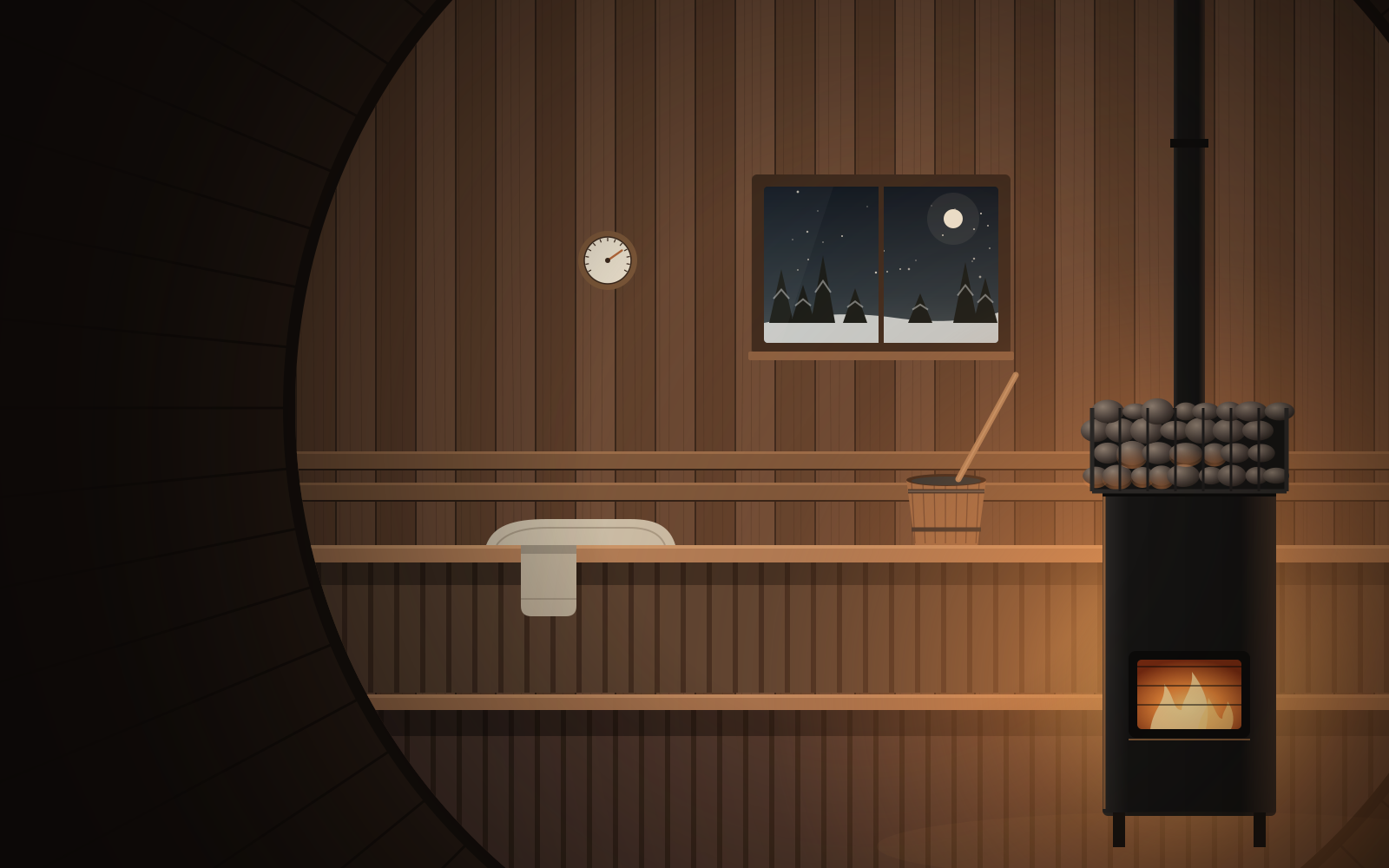
The sauna is very old and very simple. Four steps, an evening, and nothing to buy but firewood. Here's how it works, what it does for you, and how it fits a Wisconsin year.
Why it lasts
Finland has more saunas than cars. People there have been doing this for well over a thousand years, through wars, famines and the invention of the smartphone. Not because it's fashionable, but because nothing else makes a body feel this warm, this loose and this quiet in the space of an evening.
175°F
The classic heat, measured at head height on the top bench
90 min
A full evening: three rounds, start to finish
3 million
Saunas in Finland, for 5.5 million people
2020
The year UNESCO listed Finnish sauna culture as world heritage
The shape of an evening
Ninety minutes, two ways.
Andrew Huberman, a Stanford neuroscientist, lays out two sauna routines on his podcast, each built on a different study. One pairs heat with cold water. The other skips the cold and uses longer, hotter sits.
Heat · 10–15 minCold water · 1–3 minRest · 10–15 minLine shows roughly how hot and how stirred-up you feel. Not to scale.
Heat · 20 min at 80–100°CCool-down in room air · 30 minLine shows roughly how hot and how stirred-up you feel. Not to scale.
How to run it
Three rounds of 10–15 minutes in the heat, 1–3 minutes in cold water, then rest. End the last round on the cold, and skip the hot shower afterward. Let your body warm itself back up.
Why it works this way
Huberman calls this the Søberg principle, after Danish researcher Dr. Susanna Søberg. Rewarming on your own makes brown fat burn energy to make heat. Her study of winter swimmers, who averaged about 57 minutes of sauna and 11 minutes of cold water a week across 2–4 sessions, is where those weekly targets come from.
Two 20-minute sits at 80–100°C (176–212°F), with 30 minutes cooling off in room air between them. No cold plunge. Go in semi-fasted (nothing to eat for 2–3 hours before), ideally in the evening.
Why it works this way
In a study Huberman cites, two 20-minute sessions at 80°C with a 30-minute break roughly doubled growth hormone. The catch: the effect fades with repetition. In the most extreme study, a 16-fold jump on day one shrank to 2–3-fold within a week of daily sessions. So he suggests this routine once a week at most.
Not medical advice. If you have a heart condition, are pregnant or take medication that affects heat tolerance, talk to your doctor first. Photo of Andrew Huberman by Jamesbrianbounds, cropped, CC BY-SA 4.0.
The four steps
Everything you need to know.
There's no wrong way to sit in a hot room, but there is a rhythm that makes it better. Here it is, with what's happening inside you at each turn.
01
Heat
Time
10–15 min
Temp
160–190°F
Light the stove about forty-five minutes before you want to sit. Rinse off, then climb to the top bench, where the heat is.
Breathe through your nose and let your shoulders drop. After a few minutes, ladle a little water onto the stones. The soft, rolling wave of steam that follows is löyly, the soul of the Finnish sauna. A ladle at a time is plenty. Stay until you're warm right through, and leave when your body says so. Nobody's counting.
02
Cold
Time
1–3 min
Water
Under 60°F
Step out and cool down fast: a cold plunge, a cold shower or, from December to March, a snowbank.
The contrast is the point. Ease in, keep your breathing slow, and don't stay long. Thirty seconds in the snow will feel like an achievement. In summer, a garden hose or a jump off the pier does the same job. New to cold water? Start with a cool shower and work your way down over a few weeks.
03
Rest
Time
10–15 min
Where
Outdoors
Wrap up in a towel or a robe and sit somewhere quiet. This is the step most people skip, and it's the one that makes the evening.
Your skin tingles. Steam lifts off your shoulders into the cold air. Drink some water. Look at the trees. Say very little. The Finns have a word for this mood, saunarauha, sauna peace.
04
Repeat
Rounds
2–4
In all
~90 min
Go around again. Two to four rounds is typical, and most evenings end about ninety minutes after they began.
Add a log between rounds to keep the stove lively. Finish on a rest rather than the cold, have a long drink of water, and sleep better than you have in weeks.
For the body
A workout you do sitting down.
Finnish researchers have followed thousands of regular bathers for decades. The findings are some of the most striking in preventive health, and they're observational, so read them as strong signals rather than promises.
Men who used a sauna four to seven times a week had a 40% lower risk of death from any cause over about twenty years than once-a-week bathers.
−61%
Lower risk of stroke
Over roughly fifteen years, frequent bathers, men and women, were far less likely to have a stroke.
−7mmHg
Blood pressure, right after
One thirty-minute session took average systolic pressure from 137 to 130, and arteries became measurably more flexible.
150bpm
Your heart gets a workout
Heart rate climbs into the range of moderate exercise and cardiac output nearly doubles, all while you sit perfectly still.
−41%
Easier breathing
Frequent bathers had lower rates of respiratory illness, including pneumonia, over more than two decades.
+7%
Recovery and endurance
Runners who took a sauna after training for three weeks grew their blood plasma volume and ran longer before exhaustion.
The big figures come from Finland's KIHD study, comparing people who bathed 4–7 times a week with once-a-week bathers in a hot, traditional sauna. Association isn't proof, and a sauna isn't medicine. If you have a heart condition, are pregnant or take medication that affects heat tolerance, talk to your doctor first.
For the mind
The only room in the house without a screen.
Phones don't like 180°F, so they stay outside. That's half the magic. What's left is heat, quiet, and whoever you brought with you.
In the sauna, one must conduct oneself as one would in church.
84%
Deeper sleep
Of regular bathers in a global survey said the sauna helps them sleep. The drop in body temperature afterward is the same signal your body uses to wind down at night.
6 wks
A lighter mood
In a small controlled trial, a single session of whole-body heat eased symptoms of depression for six weeks. Larger studies are underway; regular bathers aren't surprised.
−65%
A sharper memory
In the same Finnish cohort, bathing four to seven times a week was linked to a much lower risk of Alzheimer's disease later in life.
0
Notifications
No email, no news, no one asking where the charger went. Twenty minutes of nothing is rare now. The sauna makes it the default.
Better conversation, too
Something about sitting side by side in the heat makes people talk. Finnish presidents famously negotiated in the sauna, and an old rule holds that everyone on the benches is equal. For families, it's the one evening a week nobody's looking at a screen. For friends, it's the best excuse to get together in February.
A way of living
Four ways to spend an evening.
A sauna in the backyard changes the shape of a week. These are the sessions our owners come back to most, written like recipes, because that's how they get passed around.
Most nights · 45 min
The weeknight reset
Light the stove when you get home, eat dinner while it heats, and sit two short rounds before bed. The best way we know to leave the workday at the back door.
2 rounds
Cool shower
Lights out by ten
Saturday · 3 hours
The long sit with friends
Invite six people, put a pot of chili on, and go slow. Four rounds, long rests around a fire, and the cold beer waits until everyone's done with the heat.
3–4 rounds
Fire pit rests
Food after
Winter weekends · 1 hour
Off the ice
A morning ice fishing on Mendota or skating on a cleared rink, then straight into the heat while your fingers still sting. Nothing thaws you like it. Snowbank between rounds.
Long first round
Snow plunge
Hot cocoa rest
After training · 30 min
The recovery session
After a long run, a ski or a game of hockey: one or two easy rounds and a cool shower. Skip the ice plunge after lifting, since it may blunt the gains. Drink more water than feels necessary.
1–2 rounds
Cool, not icy
Electrolytes
Wisconsin roots
The sauna came here a long time ago.
Around the turn of the last century, Finnish families settled the north woods of Wisconsin, Minnesota and the U.P. The story goes that many built the sauna first and lived in it while they put up the house.
Some of those old log saunas still stand up north. A hundred-odd years later, the sauna routine is finding its way into Madison backyards. Same fire, same snow, same quiet. The Midwest was always made for this.
“The sauna is the poor man's pharmacy,” goes the Finnish saying. We'd add: and the Midwesterner's porch.
Through the year
Four seasons, four saunas.
A sauna isn't a winter toy. Here's how ours get used from one ice-out to the next.
December – March
Winter
The season everything is built for. Snow for the cold plunge, stars for the rest, and a fire that's lit by four-thirty.
April – May
Spring
Cold rain on a hot roof is one of the great sounds. Mud season goes easier with somewhere warm at the end of the path.
June – August
Summer
Go late, after the heat breaks. A short, hot session and a jump off the pier is the best way we know to end a long July day.
September – November
Fall
Woodsmoke, maples and the first frost on the bench outside. The evenings get long enough to make a night of it again.
Good habits
A few sensible rules.
Sauna is gentle, but heat is heat. These are the habits we'd pass on to a friend.
01
Drink waterBefore, between rounds and after. More than you think.
02
Save the beer for laterAlcohol and high heat don't mix. Have one on the porch afterward.
03
Listen to your bodyDizzy, nauseous or uncomfortable? Step out, sit down, cool off gently.
04
Ask your doctor firstEspecially with heart or blood-pressure conditions, or during pregnancy.
05
Kids can join, brieflyLower bench, lower heat, shorter rounds, and always with an adult.
06
Never sauna alone after a cold plunge in open waterLakes are for company. Bring a friend for anything beyond the snowbank.
A small glossary
Some Finnish Sauna Terms
Löyly
The steam that rises when water meets hot stones. Also, loosely, the spirit of the sauna.
Kiuas
The sauna stove and its stones. Ours are wood-fired or electric.
Vihta
A bundle of birch branches used to gently whisk the skin in the heat. Summer's best souvenir.
Avanto
A hole cut in lake ice for a cold plunge. Not for beginners, and never alone.
Lauteet
The benches. Higher is hotter.
Saunarauha
"Sauna peace." The calm, unhurried mood you're meant to keep while bathing.
Ready for your first round?
Every Badger Sauna comes with a First Fire visit. We'll walk you through the whole routine on your own benches.